Sunday, February 28, 2016

Normadix Wins in Internet Networking Patent Lawsuit


On February 2, the U.S. District Court for the Central District of California found that Blueprint was guilty of infringing on a Nomadix patent protecting key technology for redirecting user computers to captive portal pages. The ruling actually came out after the court had previously denied three summary judgement motions filed by Blueprint RF to invalidate Nomadix's patents.

The availability of high speed internet access is a major factor determining consumer satisfaction when staying in hotel or resort lodgings. This is the market Blueprint RF has been meddling with Nomadix's IP territory.

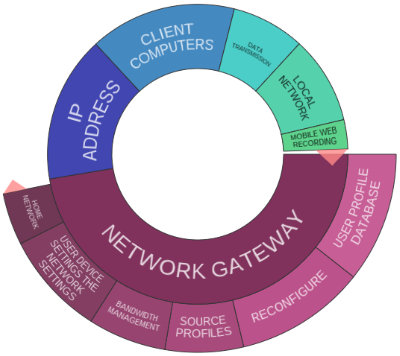
Nomadix’s Internet access gateway technologies allow a business to control public connectivity to their private wireless Internet networks. These gateways are in use in places like hotels, cafes, laundromats or other businesses where WiFi is offered to customers. The company holds more than 100 patents across 15 areas of functionality and has shipped more than 50,000 units across the globe over the past decade. The company holds 51 U.S. patents; as the Innography text cluster here will show readers, most of this intellectual property is focused on network gateways.


Friday, February 26, 2016

Apple Loses Samsung Lawsuit


A three judge panel on the U.S. Circuit Court of Appeals for the Federal Circuit reversed a verdict from 2014 that initially had Samsung paying more than $2 billion in damages from Samsung for infringing on eight different software patents.

This Friday, the appeals court determined that two of those eight patents should not have been granted initially, and added that Samsung did not infringe on the third patent. Samsung was then awarded $158,400.

This sets a precedent that patent lawsuits may be dying down, and that companies should be more wary when filing patent lawsuits without much premise. 

The judges also overturned a verdict that Samsung infringed on Apple's patents for software that automatically converts texts to links, like a phone number.

This is an overall, across-the-board loss for Apple and other tech giants who hope to make quick bucks by suing for intellectual property.


Saturday, February 13, 2016

Apple vs VirnetX (deeper understanding)


So from my previous post, you know the basics of the Apple vs VirnetX patent lawsuit. In this post, I'm going to try and dig deeper into what this case is fundamentally based on: "patent trolling".

Patent trolling is essentially when a company owns many patents and licenses or sues over them. They're usually comprised solely of litigators, since they spend most of their time in court. A patent troll never has the intention of actually creating a product based on their patents -- all their money comes from licensing and lawsuits. Most of the time, the company doesn't create the patents by themselves, but rather buy them from inventors with cash.

To me, both sides have their respective arguments. To argue for Apple, I say that this case shows a loophole in our intellectual property system here in the United States -- or even the world. Morally, the purpose of creating a patent is to prove your intellectual work and claim rights to it, so that you can develop a product eventually without a competitor stealing your idea. Additionally, one can argue that other people can build on your patent to further advance society. But VirnetX also has an argument: Apple should have done its due diligence and notice that they were infringing on somebody's patents. Legally, they own the patents and have a right to license it out to others for use.

It's really hard to say who's right and who's wrong. But at the end of the day, this suit is chump change for Apple who currently has $234 billion in the bank.

https://youtu.be/cTf4WFIqILY

Apple vs VirnetX (high-level)


VirnetX is a notorious "patent troll" (a company that makes its money through patent lawsuits without intending to implement the business-side of the patents), that has sued Apple in the past and has done so successfully again for a whopping $625 million. This case was actually filed in 2012 and Apple was forced to pay $368 million in damages. But Apple appealed and the case was sent back down to a court in Eastern Texas, where the new jury actually concluded Apple owed even more than initially.


The lawsuit came down to these patents: Establishment of a secure communication link based on a domain name service (DNS) request US 7490151 B2, Agile network protocol for secure communications using secure domain names US 7418504 B2, Agile network protocol for secure communications with assured system availability US 6502135 B1, and Agile network protocol for secure communications using secure domain names US 7921211 B2. These patents are very technical and beyond the scope of this blog post, but they mostly revolve around Apple's VPN (Virtual Private Network) usage in the iPhone's iMessage and FaceTime services.

Interestingly, this lawsuit was filed in Eastern Texas to a court that is notoriously friendly to patent holders. While I believe VirnetX legally holds the rights to these patents, it's a little discomforting to see that they were sneaky about the lawsuit and tried to cheat the system.

https://youtu.be/dBiLbsJGjig

Saturday, February 6, 2016

Vaccines -- The Most Important Invention


The earliest hints of vaccine practice come from the Chinese via the practice of inoculation for smallpox in the 10th century. A vaccine is a biological preparation that provides active acquired immunity to a particular disease. A vaccine typically contains an agent that resembles a disease-causing micro-organism made from weakened or killed forms of the microbe. Once injected into the person's body, the person's immune system will recognize it as a threat and destroy it, while keeping a record of it so it will destroy any similar micro-organisms later encountered.

Vaccination is the most effective method of preventing infectious diseases. Immunity due to vaccination is responsible for the worldwide eradication of smallpox and the restriction of other diseases such as tetanus, measles, and polio from most of the world. Needless to say, vaccines have saved millions of human lives throughout our history.

The reason I believe vaccines are the most important invention in human history, is because it could have saved our species from extinction. The thing that separates humans from other animals is our intelligence--and as a species, we have been able to develop a "pre-cure" for diseases. I think that's pretty amazing.

In today's world, it's easy to dismiss vaccines as incredibly important and revolutionary, but that's because it has become so engrained in our society because of its importance. For example, we are required to get certain vaccinations at birth, for school, and for work. If somebody does not get a vaccine, they are putting others at harm's way because they can spread disease if not vaccinated.

Before vaccines, death by disease was not uncommon. People knew that there was a high chance they could die prematurely due to disease or infection. Sanitary conditions back then were also not great, which only magnified the terrible consequences of disease spreading around. Now, thanks to vaccines, sanitation, and technology, I can live my life without worrying about dying of smallpox and other eradicated diseases.

https://www.youtube.com/watch?v=wCHcTfph8-Q

Refined Top 10 Inventions

A new week means a smarter me. After reading, watching, and listening to other students' top 10 inventions lists, I realized I missed some key inventions that really shaped how we live today. Without further ado, here it is:

1. Concrete


Walk outside, and think about the material that makes up a lot of our world today. It's not even natural, it's manmade -- concrete. Without concrete and other new manmade materials, we wouldn't have the sidewalks, roads, buildings, bridges, etc. that we have today. Without concrete, we may still have some buildings built out of wood, which could be burnt down from a fire in a breath.

2. Mathematics


The origins of math dates back long ago. An ongoing study of numbers and logic, mathematics is a basic science now used for calculating almost all our technology today: mechanics, graph theory, astronomy, chemistry, physics, GPS navigation, internet architecture, and the list goes on. We still haven't discovered everything about math yet, which is just so exciting because the possibilities are limitless.

3. Vaccines


Vaccines--and many other forms of medicine such as antibiotics--are essential for humans to prevent deadly disease. Before we had vaccines, disease could wipe out a huge portion of the human population (take smallpox, for example). The smallpox death count in the 20th century was around 300-500 million deaths. That's right, million. Without vaccines and other medical advancement, the human population would be a lot smaller and perhaps even dangerously close to extinction today.

4. Glass


Glass -- another one of the most important manmade materials. We use glass in so many things today -- windows, mirrors, telescopes, spectacles, tupperware, etc. Without glass, our homes, eyesight, and knowledge of the universe beyond Earth would be very different today.

5. Compass


The compass allowed early explorers and settlers to navigate the terrain. Without the compass, maps would be almost impossible to draw and society would be very difficult to plan. People would not be able to find each other and communicate as easily, leading to a world of secluded groups of people. By giving humans a sense of direction, the compass allowed us to find other parts of the world.

6. Telephone


The telephone was crucial in promoting communication globally. Prior to the telephone, there was no way to communicate via voice to people not present around you. Now, we can pick up a phone and call someone instantly and talk with very little lag. This allowed businesses to conduct more business elsewhere, governments to communicate more with other countries, people to maintain long-distance relationships, and the list goes on. 

7. Light Bulb


The light bulb allowed humans to see anywhere -- regardless of natural light present. Prior to electric light, all we had was controlled fire -- which is both dangerous and not ideal for all situations. With Thomas Edison's invention of the light bulb, humans could now bring the gift of sight with them anywhere. This accelerated society's progress, because now people could get more work done anywhere and at any time.


8. Internet

The Internet has been a huge milestone in connecting people around the world and providing information to everybody. Though not every person on the planet has internet access yet, a large majority do and companies such as Facebook and Google are working on connecting third-world countries to the internet. The fact that I can type a sentence and send it to somebody on the other side of the world, instantly, is very amazing. Now, the internet stores a vast amount of our data and information. We essentially have digital lives on the internet now!

9. Automobile


The automobile really revolutionized travel around the world. No longer did we need to travel by horse or foot. Long distance travel on land became something that anybody could do without worry of the dangers on the journey. Just as with communication, an increase in the ease of travel allowed society to further flourish and prosper. Today, it would take me only 6 hours to travel from San Francisco to Los Angeles. If the car had not been invented, I would need to know how to ride a horse and set camp for the long trek.

10. Camera


Without the camera, we wouldn't be able to see how people in the past really looked like! The camera allowed us to cherish our childhood memories and remember how other people look like. Now, we can share pictures and videos of ourselves any time of the day and instantly, through our smartphones. This also allows education to be spread easier, and people to stay in touch with far away loved ones through video chat.

https://www.youtube.com/watch?v=3_w4Zclzliw